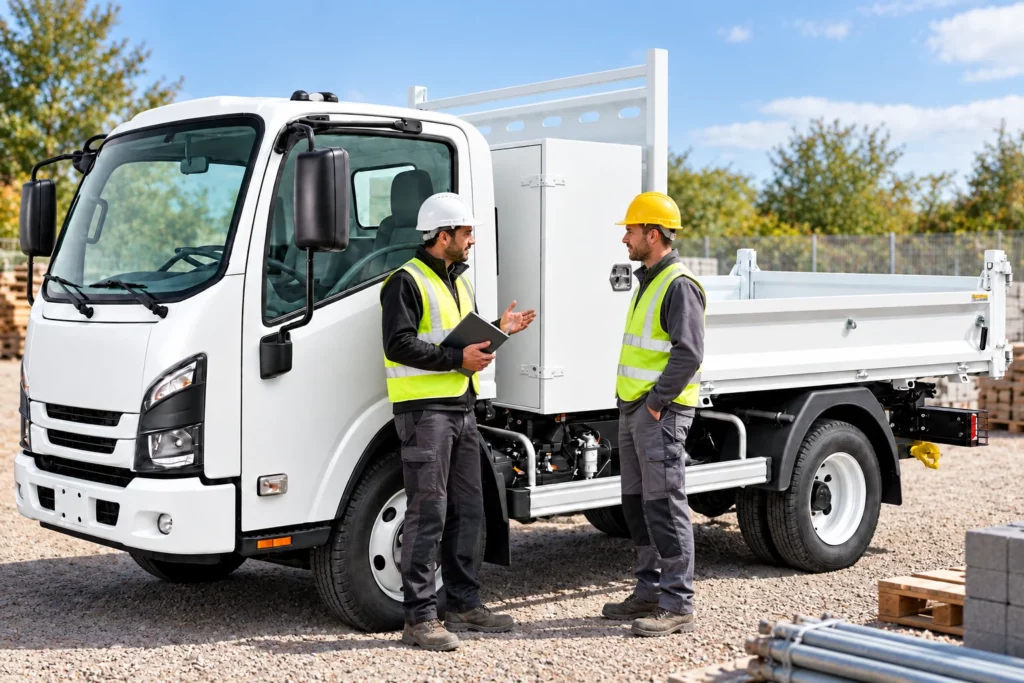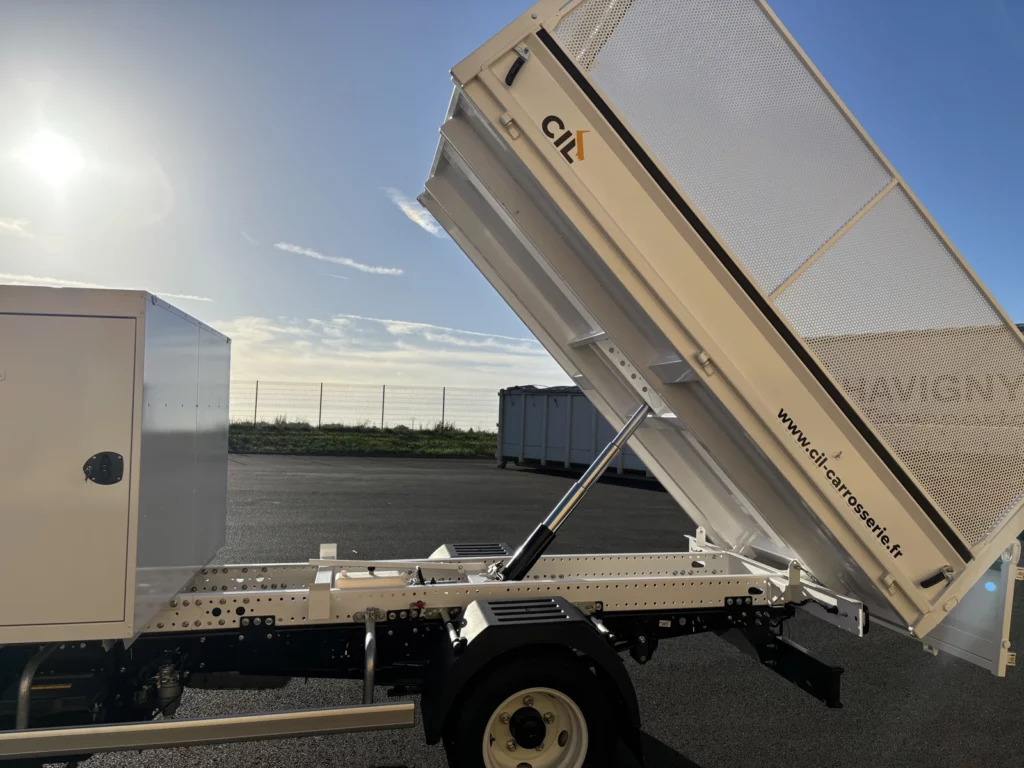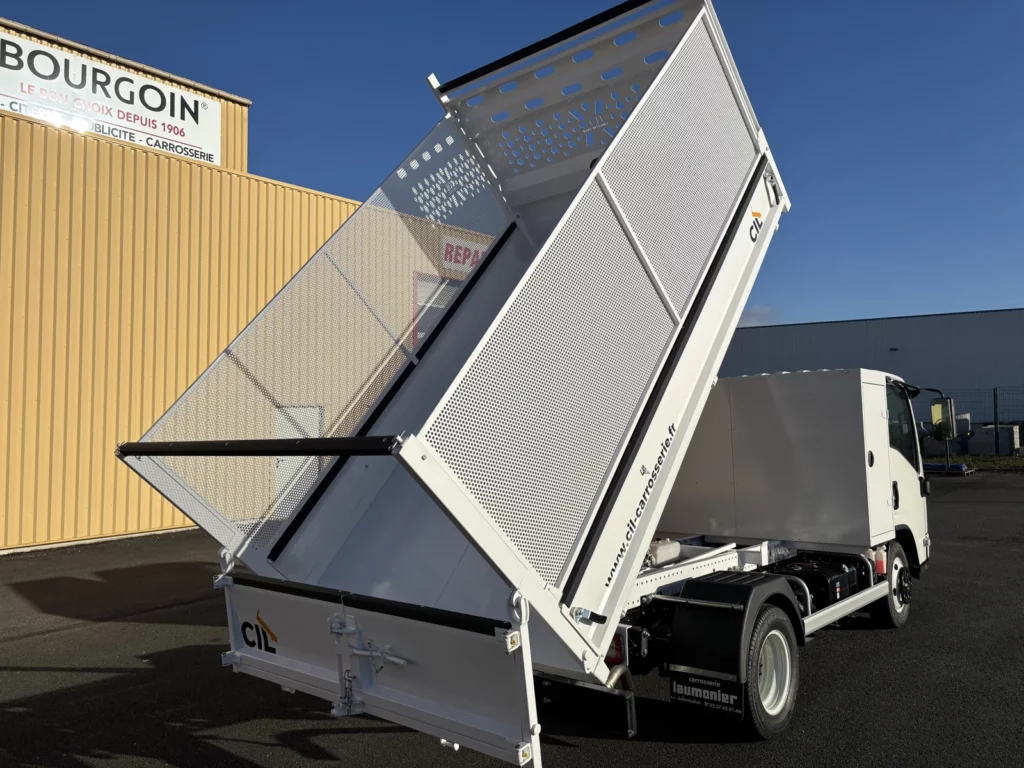
At first glance, an aluminium tipper body has a lot going for it: lighter when empty, it promises to carry more. At CIL, we know how to work with aluminium: extension sides, dropsides, doors and many other parts can be made from it. But more than 50 years of building tipper bodies have taught us one thing: for a tipper that works every day, takes knocks and still has to be in service in ten years’ time, steel remains the right material. Here is why.
1. Why aluminium looks tempting
The case for aluminium fits in one sentence: a lower unladen weight. On a 3.5 tonne vehicle, that really matters, because every kilo of tipper body is a kilo less of load. The Road Vehicles (Construction and Use) Regulations 1986 prohibit using a vehicle on a road if any of the weights shown on its plate, its gross vehicle weight (GVW) or the weight on an axle, is reached or exceeded (regulation 80).
But this reasoning stops too soon. Aluminium is less stiff than steel: to withstand the same forces, it needs more material, thicker sections and extra reinforcements. The promised weight saving melts away once the body is actually built for site work. A well-designed steel body, with well-designed dropsides, can sometimes even be lighter than an aluminium one.
The only comparison that counts: the weight of each complete tipper body, equipped as you will use it, with comparable body dimensions. Ask for it in writing in every quote.
2. Stiffness and impacts: where aluminium falls short
A tipper body has a hard life: stones thrown in with a shovel, concrete blocks, rubble, loading with a bucket, site tracks. This is exactly where aluminium shows its limits:
- it is less stiff: an aluminium dropside or floor bends more easily under load;
- it copes badly with impacts: a falling block or a bucket that catches it leaves a deep mark;
- it tears: on aluminium, an impact can start a crack, and that crack tends to grow with road vibration. On steel, the same impact makes a dent: the metal deforms, can be straightened, and the tear does not spread;
- it fatigues: over the years, with vibration and repeated loading, aluminium loses strength. Steel keeps its strength.
A builder who loads rubble every day knows this well, but landscapers also come across stones and stumps. To go further for your trade, see our articles on choosing a tipper for a builder and on equipping a tipper for a landscaper.
3. Repair: the question people forget when buying
Today, your tipper is new. But ask yourself: what will it look like in ten years, and who will be able to repair it?
A steel part can be repaired anywhere. Any bodyshop or fabrication workshop can straighten it, cut it and weld it. Often, someone in your own business can run a weld. Steel straightens easily and is quick to repair: the tipper goes back to work.
Aluminium is another story. Welding it calls for specific equipment and skills, and not everyone is equipped to repair it. The result: you have to find the right workshop, wait, pay more, and meanwhile the truck is off the road.
4. Our method: steel engineered to be light and strong
The right answer to weight is not to change material: it is to design better. That is the work of our design office and our engineers.
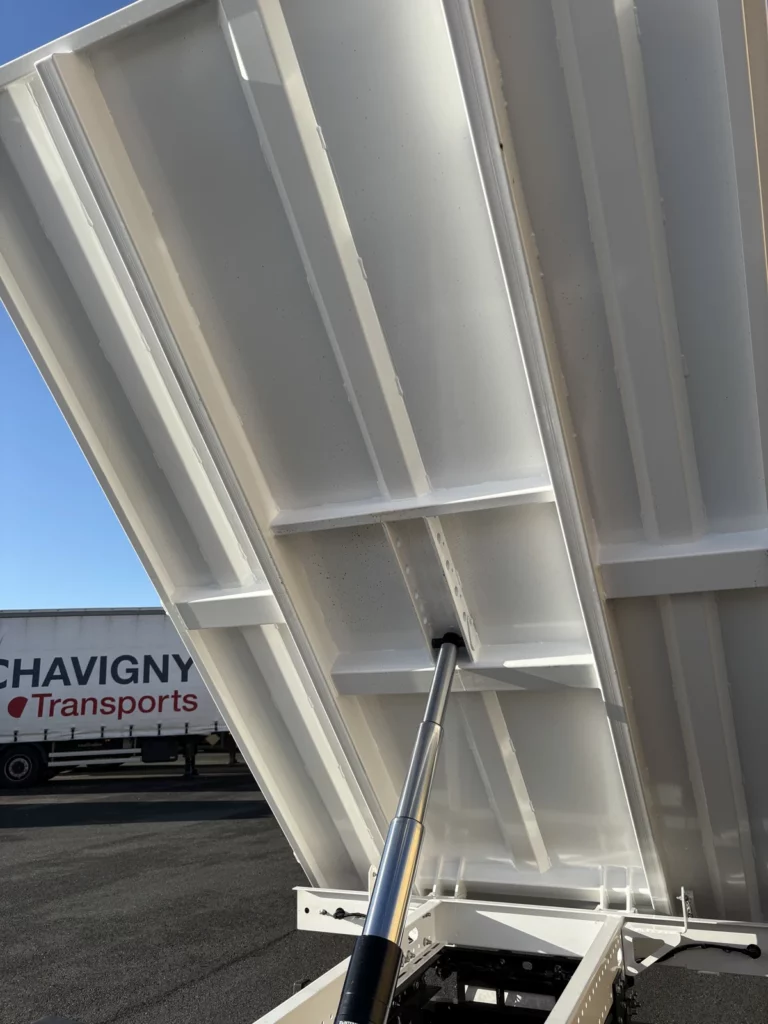
We start from the strongest material, steel, then we work on its shape: the number of folds, the reinforcements, the geometry of each part. This engineering work increases stiffness and strength without adding unnecessary weight. It produces light steel parts, with thick sections where they are needed: at the points most exposed to friction, abrasion and impacts.
On the CIL 3.5 t tipper, this means:
- a 3 mm steel floor, where rubble rubs and blocks fall;
- 2 mm steel dropsides folded with closed folds, which double the thickness where the force is greatest;
- 3 mm reinforcing angles.
And to make this steel last, it is protected properly: shot-blasting, phosphating, then a suitable paint finish.
5. So what about aluminium?
We do not rule it out on principle. We know how to work with it and we use it when a customer asks, for example for extension sides, dropsides or doors. But our advice is clear: for everything that takes impacts, abrasion and years of site work, starting with the floor and the body, steel is the material that lasts.
6. Compare two quotes on the same basis
To compare two proposals, ask for each one:
| What to ask for | Why |
|---|---|
| Weight of the complete, equipped tipper body | Check the real weight saving |
| Material of each part: floor, dropsides, door | Know what takes the impacts |
| Thicknesses, and where they are placed | Judge strength where it matters |
| Uses permitted by the manufacturer (bucket, blocks) | Check it suits your work |
| Surface treatment and paint | Anticipate how it will last |
| Whether it can be repaired near you | Avoid time off the road |
| Warranty, in writing | Know what is covered |
Undecided between several configurations? Tell CIL what you carry and which chassis you have. Ask for a quote for my tipper project
Frequently asked questions
Does an aluminium tipper body always let you carry more?
Not always. A well-designed steel body, with well-designed dropsides, can sometimes be lighter than an aluminium one. Compare the actual weight of the complete bodies, not the name of the material.
Does steel rust?
Not if it is properly prepared and protected. At CIL, the steel is shot-blasted, phosphated, then painted with the appropriate technique: it lasts. A paint chip caused by an impact is easy to touch up.
Which tipper body for bucket loading?
There is no question about it: it has to be steel. Only a steel floor and steel sides can take the impacts of a bucket over time.
Do extension sides increase the permitted load?
No. They increase the volume of the body. The permitted weight is still set by the GVW, and the extension sides add their own weight.
A project? Need a  tipper? A question?
Write to us or call us: we will get back to you quickly.
Request a quote