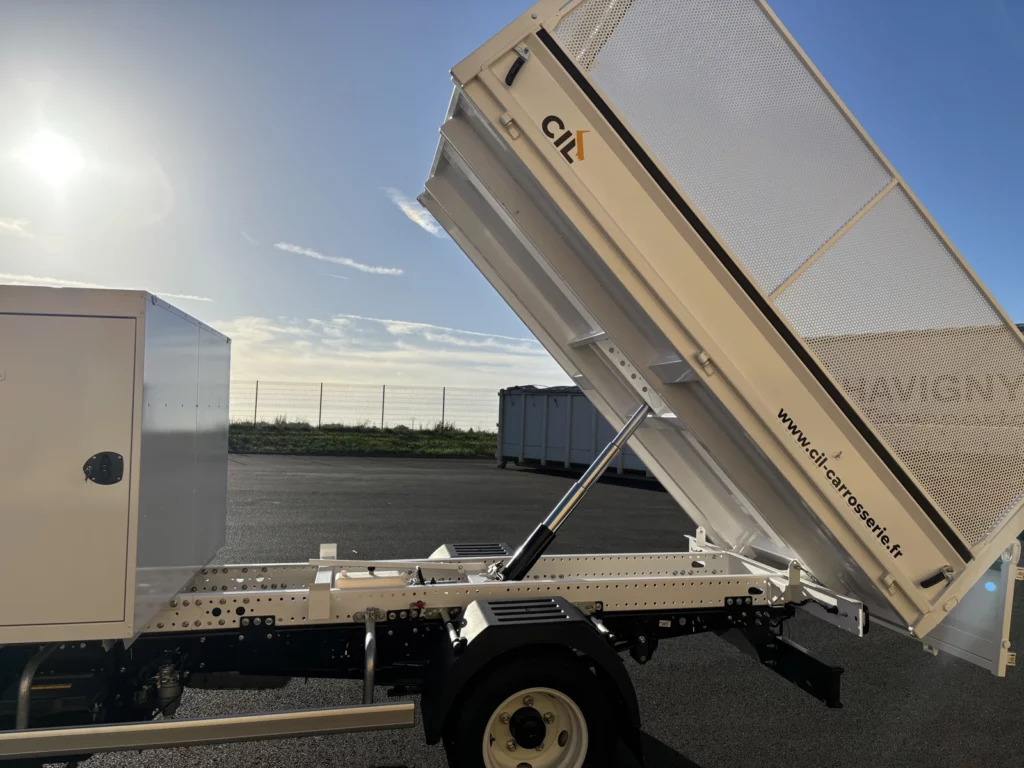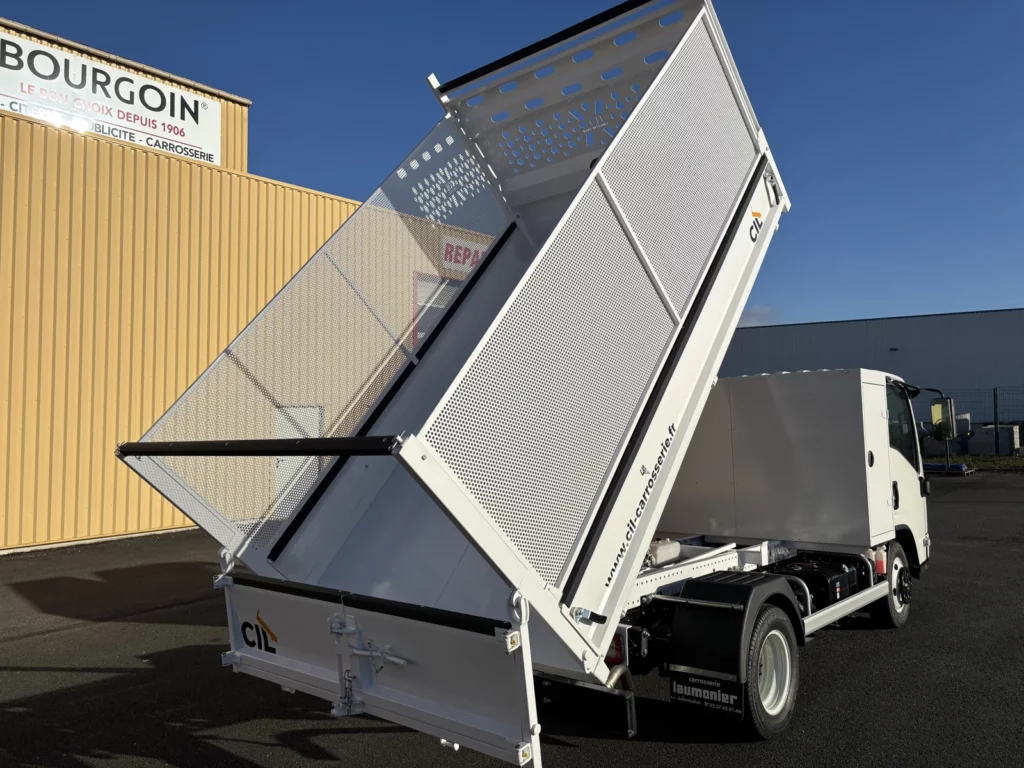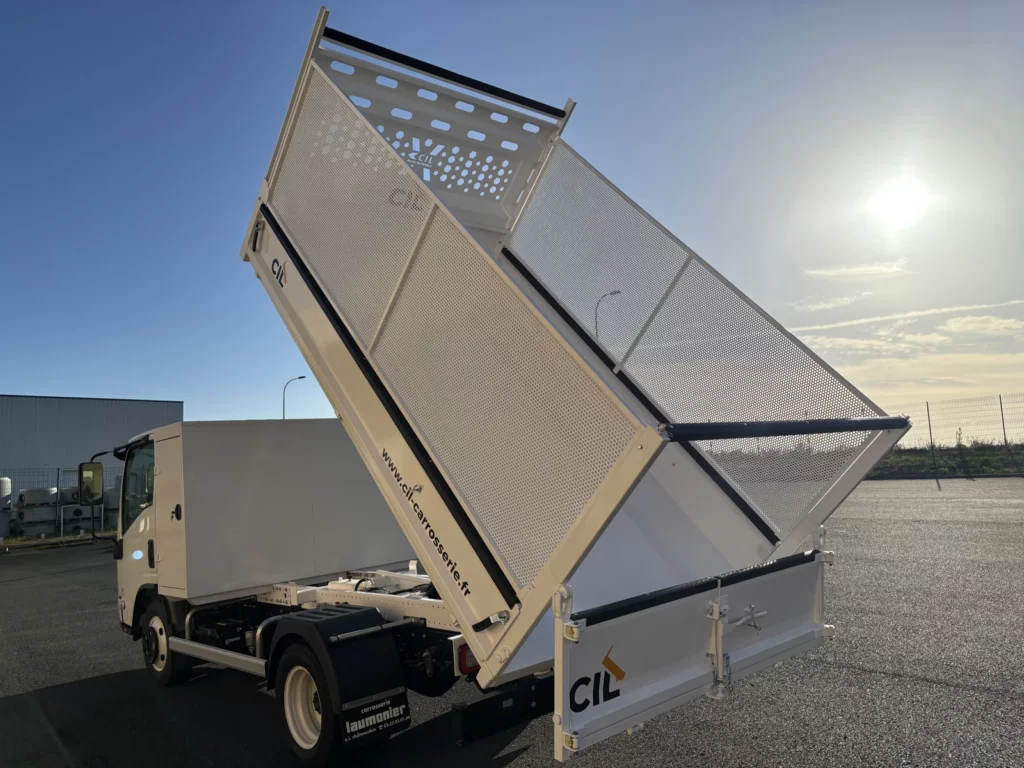
Tipping takes a few seconds, but it is the moment when the truck is least stable: the load rises, the centre of gravity shifts and the body lifts above the cab. To tip safely, you need firm, level ground, a clear space above and around the truck, and to follow the sequence set out in the instructions for your tipper. If anything does not go as it should, you stop and lower the body.
What the rules say
There is no « tipping manual » written into law. Two sources nevertheless frame the practice at work:
- The Provision and Use of Work Equipment Regulations 1998 (PUWER) require the employer to make sure that employees who use equipment have adequate health and safety information and, where appropriate, written instructions, covering the conditions and methods of use, foreseeable abnormal situations and the action to take if they occur (regulation 8).
- The manufacturer’s instructions for the tipper describe the operating sequence, the limits and the safety devices of your configuration. They are the reference for your equipment.
The advice below consists of safety recommendations. It does not replace the instructions or the risk assessment for your own site.
1. Prepare the unloading area
Before lifting anything, look at the ground:
- Level: a sideways slope, even a slight one, pushes the load to the side as the body rises and can tip the truck over.
- Firm: freshly dug soil, backfill or the edge of an excavation can give way under a wheel just as the weight shifts towards the rear.
- Clear: the truck must be able to move forward to finish emptying the body, with no obstacle in front of it.
If the ground is not suitable, move the truck. Do not tip « just a little » to see what happens.
2. Check for obstacles and keep the area clear
Look up. A raised tipper body rises well above the cab: check that there are no branches, canopies, structures and above all no overhead power lines. The safe distance depends on the voltage of the line; if in doubt, do not lift and contact the owner of the line, the network operator.
Then look around the truck:
- Nobody behind the tipper, in the area where the load falls.
- Nobody at the sides close by.
- Nobody under the body, ever, throughout the operation.
On a busy site, a colleague who guides you and keeps the area clear is better than the mirrors.
3. Follow the sequence in the instructions
The exact sequence depends on the build: type of door, locking devices, top or bottom opening. The instructions for your tipper set it out. On a tipper fitted with a universal rear door, for example, the way the door is opened and locked changes depending on whether you are unloading at the rear or opening it fully.
A few principles apply everywhere:
- Lift gradually, keeping the controls in your hand and the area in view.
- Let the load slide out by itself.
- Do not shake the truck or jerk it to free a stuck load.
- Do not drive with the body raised, except for any slow forward movement allowed by the instructions to finish emptying.
- Never climb into the body to free a load.
4. Stop if anything is not normal
Stop the operation and lower the body if:
- the truck leans or a wheel sinks;
- the load stays stuck at the top of the body;
- the tipper lifts in jerks, makes an unusual noise or stops lifting;
- an oil leak appears.
A load stuck high up is the most dangerous situation: all the weight is at the top and at the rear. Do not try to free it by manoeuvring. Lower the body, then clear the load from the ground, with suitable tools.
If the tipper will not lift or behaves irregularly, our article on the checks to make when the tipper will not lift sets out the useful observations and what not to do.
5. Before getting back on the road
- The body is fully lowered, resting on its supports.
- The rear door and the dropsides are closed and locked.
- No residue is left on the floor that could fall off on the road.
- The tipper controls are returned to the rest position as set out in the instructions.
These checks take a minute and prevent most incidents on the way back.
And under the tipper?
Working under a raised body is never a trivial matter. You only go under it if the body is held by the mechanical device provided for this purpose, such as a safety prop, following the procedure in the instructions. The cylinder alone is not enough to keep a person safe. The CIL 3.5 t tipper is fitted with a mechanical safety prop that holds the body in the raised position; it is used as set out in the instructions.
A tipper designed for unloading
On the CIL 3.5 t tipper, two 6 mm steel guides re-centre the body every time it comes down, and the control box is on a 4 m harness, so you can keep the unloading area in view.
Preparing a truck for your sites? Describe your unloading conditions to CIL. Ask for a quote for my tipper project
Frequently asked questions
How far from a power line can you tip?
The safe distance depends on the voltage of the line. It cannot be guessed: if in doubt, do not raise the tipper and contact the network operator that owns the line before going ahead.
Can you drive forward with the body raised to finish emptying?
Only if the instructions allow it, very slowly, on level, clear ground. Driving with the body raised to move around must be avoided.
What should you do if the load stays stuck at the top?
Stop, lower the body and clear the load from the ground. Do not shake the truck and do not climb into the body.
Can an employee tip without having been given information?
No. The employer must make sure they have adequate information and, where appropriate, written instructions on the conditions and methods of use and on foreseeable abnormal situations and the action to take (regulation 8 of the Provision and Use of Work Equipment Regulations 1998).
Updated 25 October 2026
A project? Need a  tipper? A question?
Write to us or call us: we will get back to you quickly.
Request a quote