The hydraulic power pack is the engine of your tipper: without it, the body does not lift. A regular check by the user is limited to what can be seen without dismantling anything: traces of oil, condition of the hoses, mountings, oil level when the instructions provide for it. Everything else, from pressure settings to the electrical circuit, is a job for a professional. Here is how to carry out this check usefully, without putting yourself at risk.
1. What does the power pack do?
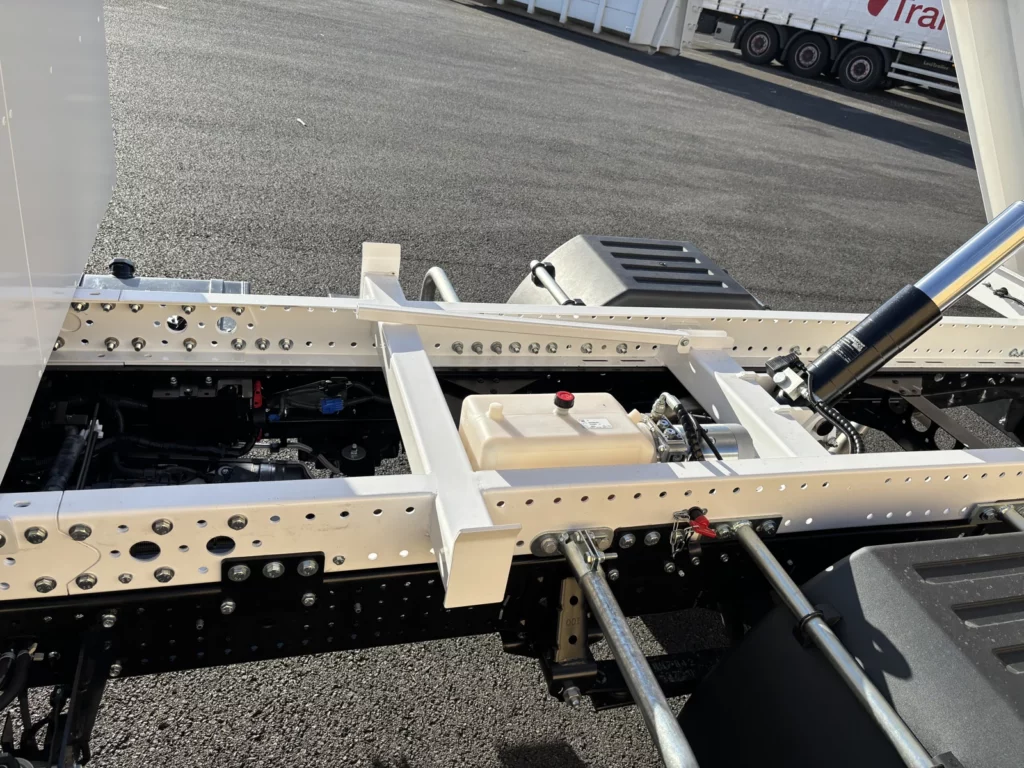
On a 3.5 t tipper, the hydraulic power pack combines in a single unit:
- an electric motor, powered by the vehicle’s battery;
- a pump, which pressurises the oil;
- a tank, which holds the oil for the circuit;
- valves, including a pressure relief valve that protects the circuit.
The pressurised oil is sent through hoses to the cylinder, which pushes the body upwards. When the body comes down, the oil returns to the tank.
A point that is often misunderstood: the pressure of the power pack is not a carrying capacity. A power pack set at 200 bar does not let you load more. What you can carry depends on the vehicle’s gross vehicle weight and its actual payload, shown in its documents and on its plate.
On the CIL 3.5 t tipper, the power pack runs on 12 or 24 V, it is set at 200 bar and its tank holds 8 L. These 8 L are the total capacity of the tank, not a fill volume: the correct level is the one given in the instructions.
2. Preparing a visual check without exposure
The check is carried out from an accessible position, without going under the body:
- vehicle stationary, on level ground, parking brake applied;
- tipper body in the position specified in the instructions for the check;
- power pack motor off and controls out of reach of anyone else.
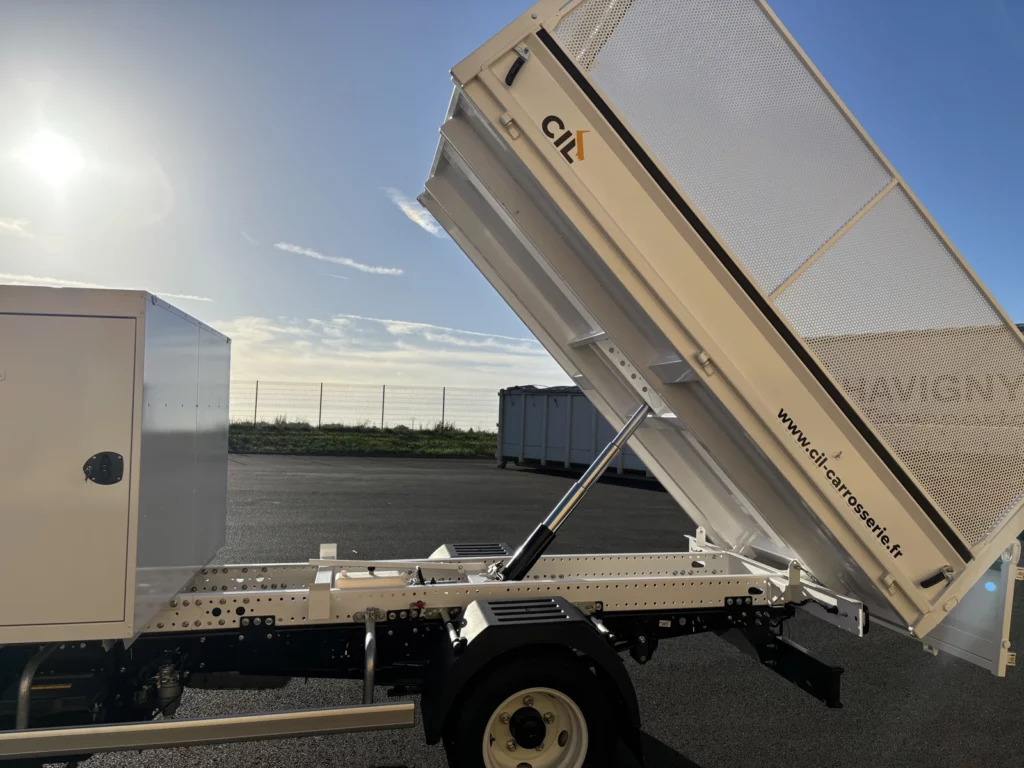
If a check requires working under a raised body, the body must be held by the mechanical device provided, such as a safety prop, following the procedure in the instructions. The cylinder alone is not enough to protect a person. The CIL tipper is fitted with a mechanical safety prop that holds the body in the raised position; it is used as set out in the instructions.
3. Look for leaks and check the hoses
Look, without touching any parts under pressure, for:
- traces of oil on the power pack, the fittings, the cylinder or on the ground under the truck;
- hoses: no cracking, bulging, rubbing against the chassis or crushed bends;
- mountings of the power pack and hoses in place;
- electrical cables and terminals without visible corrosion or damaged sheathing.
Never look for a leak with your hand. A very fine jet of oil under pressure can penetrate the skin and cause a serious injury, even if it looks harmless. Tracing an active leak is a workshop job.
A trace of oil is not « fixed » by tightening a fitting at random: an overtightened fitting can crack, and working on a pressurised circuit is dangerous.
4. Oil level and power supply: follow the instructions
The oil level is checked with the body in the position given in the instructions, because the amount of oil in the tank varies depending on whether the cylinder is retracted or extended. The type of oil is also specified in the instructions. Topping up with the wrong oil can damage the seals.
On the power supply side, the user can check that the vehicle’s battery is well charged: an electric power pack needs enough voltage to lift. Internal checks of the electrical circuit and any isolation for work are reserved for a competent person.
What the user does not do:
- dismantle a fitting or a hose;
- adjust the pressure relief valve;
- replace a fuse with a higher-rated one;
- bypass a safety device or a control.
5. When to stop and have it checked
Call in a professional, without using the tipper again, if you notice:
- an active leak, a cracked or bulging hose;
- a drop in oil level from one check to the next;
- an unusual noise from the pump or a motor that runs without the body lifting;
- slow or jerky lifting, or a body that lowers by itself.
To diagnose a tipper that will not lift, see our dedicated article. To organise maintenance over time, see our article on maintaining a hydraulic tipper.
Write down what you see
A useful check leaves a record: the date, what was seen, what was done. This log helps the workshop understand the history of your equipment: as the Health and Safety Executive (HSE) points out in its guidance on maintaining work equipment, a detailed maintenance log tells maintenance staff what has been done before.
A question about your equipment or about the power pack of a CIL tipper? Contact CIL about my equipment
Frequently asked questions
Does a higher pressure let you load more?
No. The pressure is used to lift the body. The weight you can carry is set by the vehicle’s gross vehicle weight and its payload.
When should the oil level be checked?
At the intervals and with the body in the position given in the instructions for your equipment.
Can I tighten a fitting that is weeping?
No. Work on a hydraulic fitting is done with the circuit depressurised, by a competent person. Overtightening can make the leak worse.
The tipper lifts slowly: is it serious?
It may be a weak battery, a low oil level or too heavy a load. Stop, do not force it, and have it checked if the symptom persists.
A project? Need a  tipper? A question?
Write to us or call us: we will get back to you quickly.
Request a quote