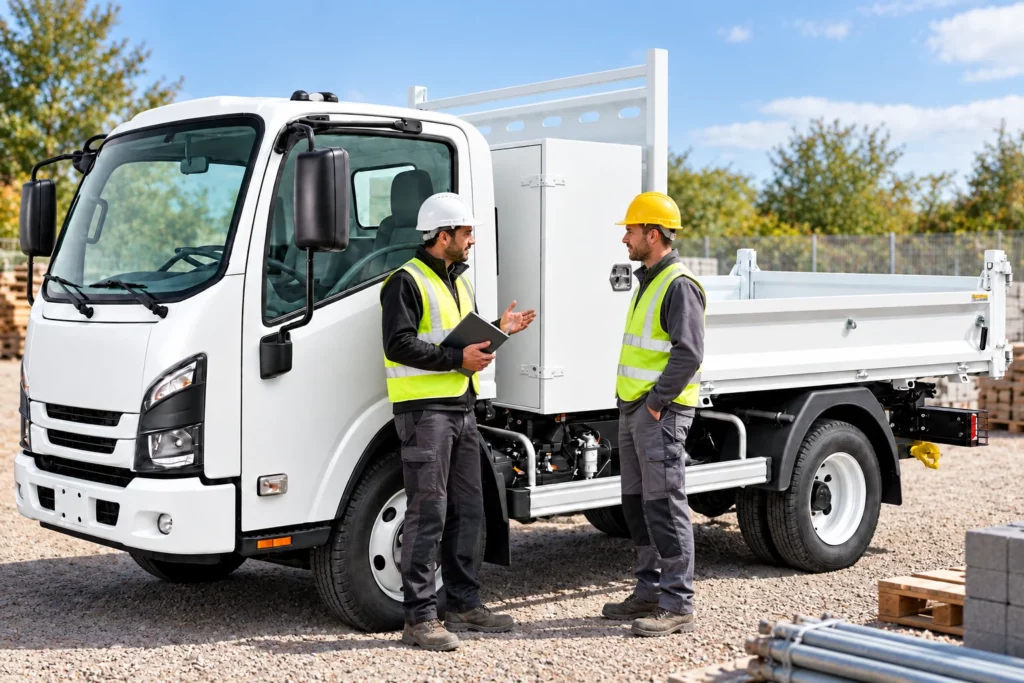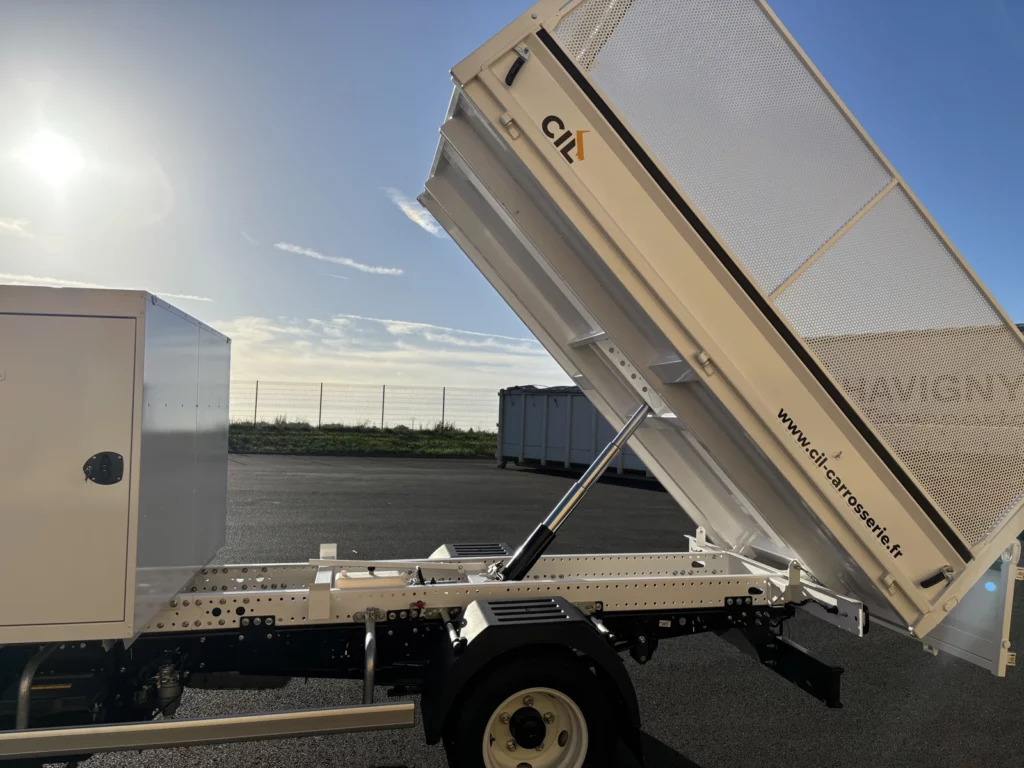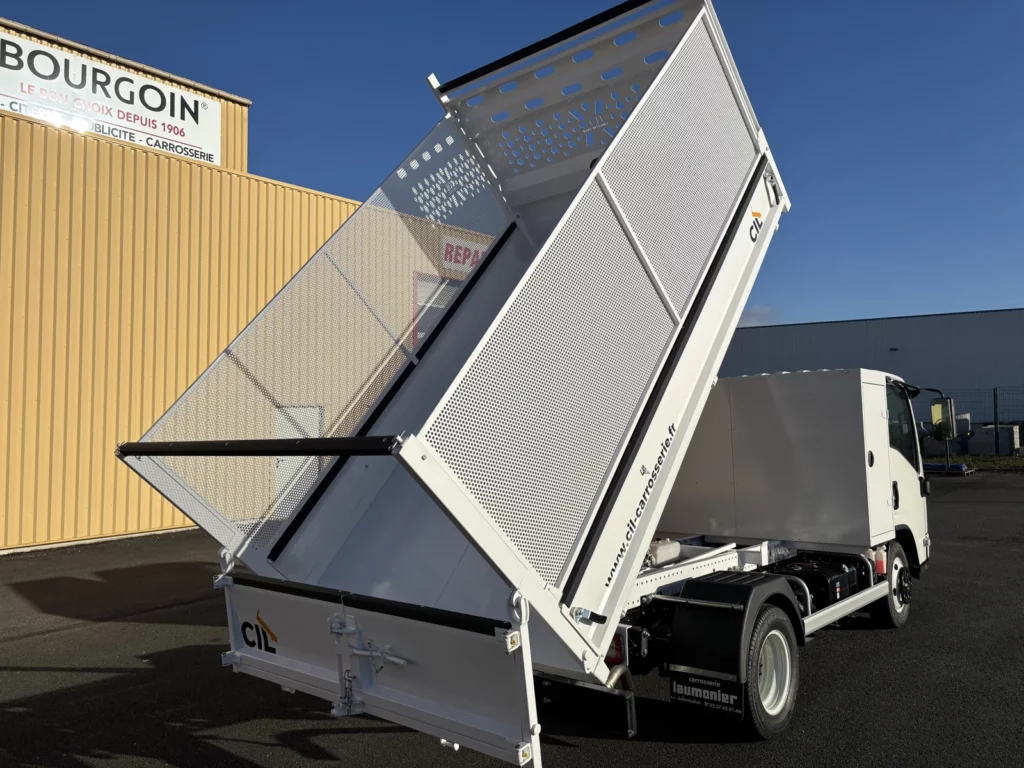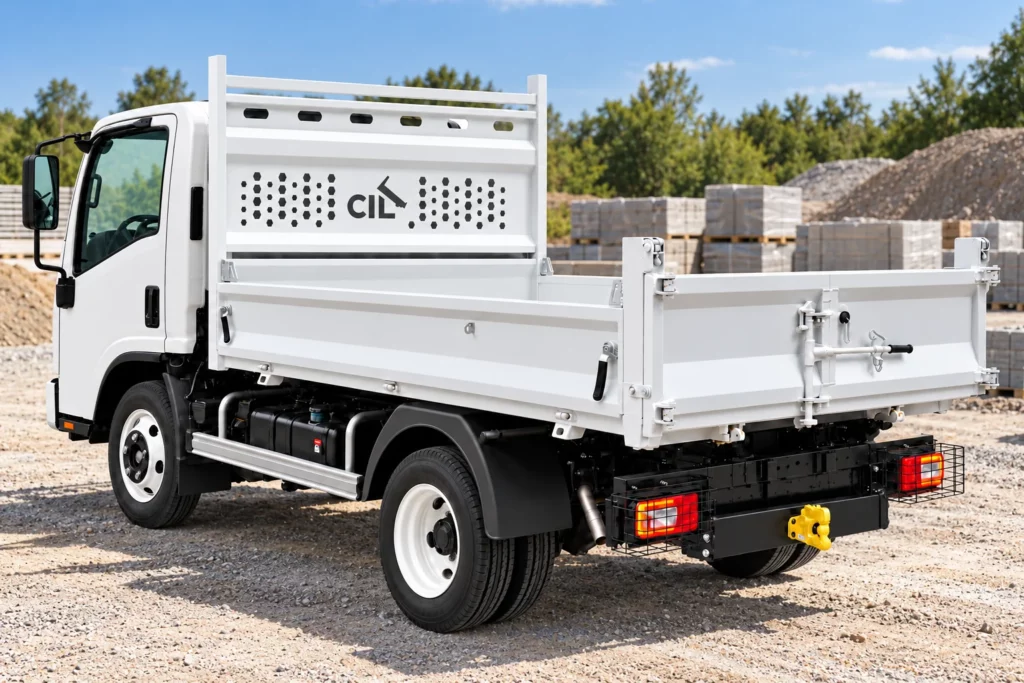
Hitching a trailer to a tipper truck can make it easier for a builder or a landscaper to move equipment. But a trailer that suits the work is not automatically compatible with the driver’s licence or with what the truck can do. These two checks have to be made separately.
First check: which licence for the combination?
For the categories shown below, the licence rule is based on the maximum authorised mass (MAM) of the vehicle and of the trailer, as shown on their plates. It is not worked out from the weight actually carried on the day of the journey.
| Trailer and combined MAM | Matching licence |
|---|---|
| Trailer with a MAM of 750 kg or less | B, with a category B towing vehicle |
| Trailer over 750 kg and combined MAM up to 3,500 kg | B |
| Trailer over 750 kg, up to 3,500 kg, and combined MAM over 3,500 kg | BE: since 16 December 2021, it is added automatically to a category B licence obtained by passing the car test from 1 January 1997 |
| Trailer over 3,500 kg MAM | Beyond category BE: check with the DVLA which category applies |
Other combinations need their category to be looked at case by case. If you passed your car test before 1 January 1997, your licence usually covers combinations up to 8,250 kg MAM: check the categories on your licence. The official rules are set out on the government website (GOV.UK).
Check your own case
Enter the MAM of your truck and of your trailer, as shown on their plates: the CIL simulator tells you which licence you need.
When the truck already shows a MAM of 3,500 kg
This is a common situation for tipper vans. With a truck whose MAM is exactly 3,500 kg and a trailer with a MAM of 750 kg, a category B licence is enough as far as licence categories are concerned.
If, on the other hand, the trailer has a MAM of 1,500 kg, the combined MAM reaches 5,000 kg. The example then falls under category BE, which in Great Britain has been added automatically since 16 December 2021 to a category B licence obtained by passing the car test from 1 January 1997, subject to its other conditions. A less heavily loaded trailer does not change the category: it is the trailer’s MAM that counts, not its load on the day.
Second check: can the truck tow?
Holding the right licence does not give the vehicle any extra capacity. You need to check the towing vehicle’s plate and documents, the manufacturer’s limits, those of the coupling and the characteristics of the trailer.
On a vehicle designed to tow, the plate shows the gross train weight, the maximum permitted weight of the vehicle and its trailer together. The actual weight of the combination must stay within this limit. The truck and the trailer must also stay within their own limits and respect the permitted axle weights. The general framework is set by regulation 80 of the Road Vehicles (Construction and Use) Regulations 1986.
The difference between the gross train weight and the gross vehicle weight can be a useful indication, but it does not on its own cover every towing condition. Do not plan on transferring weight or on a higher capacity without checking the applicable documents.
Preparing to carry equipment
Before buying a trailer, gather the plates and documents of both vehicles, the specifications of the coupling and the weight of the equipment to be carried. The trailer itself counts in its loaded weight. A machine alone therefore cannot weigh as much as the trailer’s MAM.
Then check the load securing, the connections and the pre-departure checks set out in the instructions. Choosing the right licence does not deal with these points for you.
Preparing a tipper van that will tow? Contact CIL about your project, with your chassis and your needs. The CIL tipper page is a good place to start looking at the equipment.
Frequently asked questions
Does a category B licence cover any trade trailer?
No. It depends on the MAM of the trailer and of the combination.
Does an empty trailer change the licence required?
Its low actual weight does not remove the criteria based on maximum authorised mass.
Does category BE allow any towing?
No. The limits of the vehicle and of the coupling still apply.
Do you also need to check the weight of the machine being carried?
Yes, together with its accessories and the trailer’s own weight.
A project? Need a  tipper? A question?
Write to us or call us: we will get back to you quickly.
Request a quote