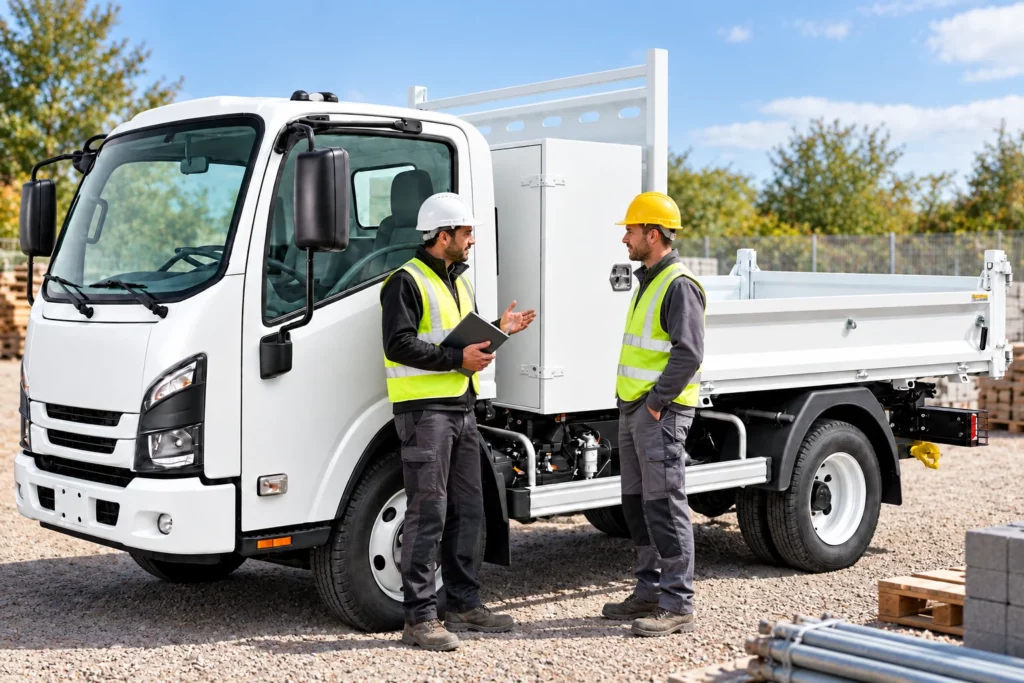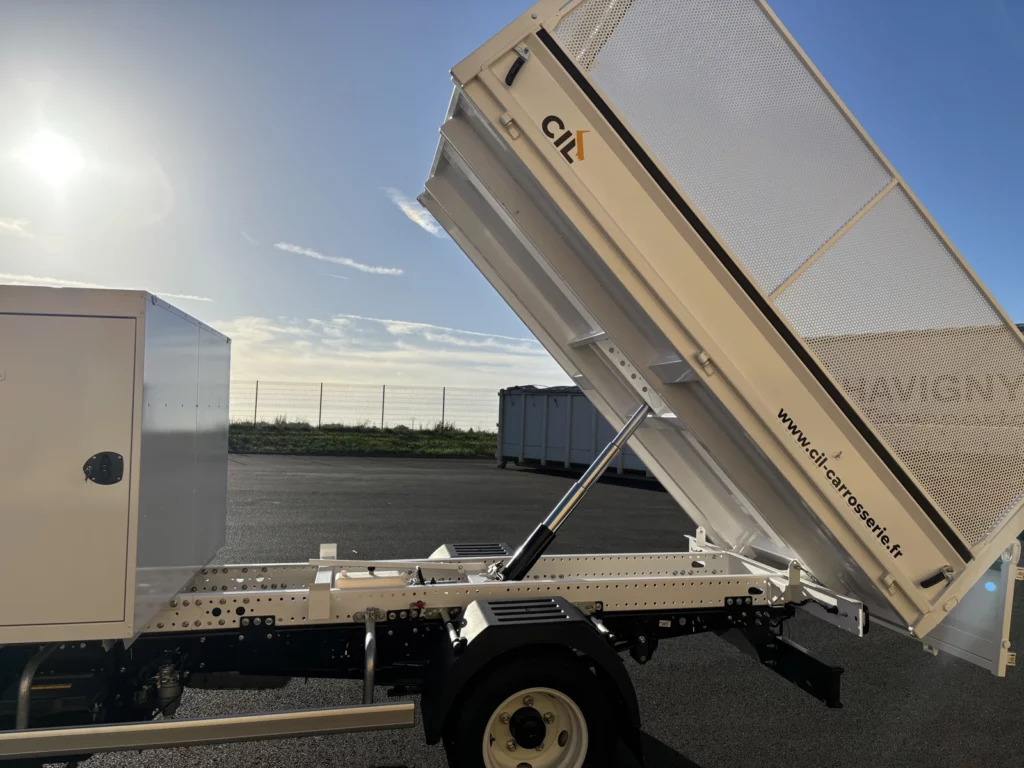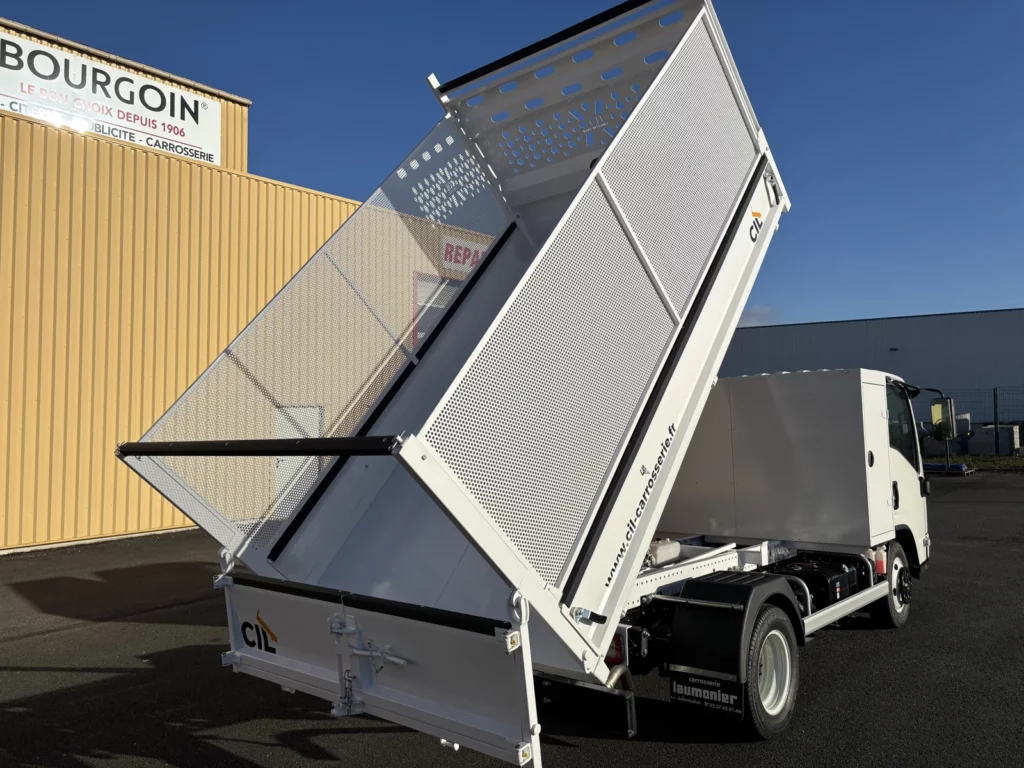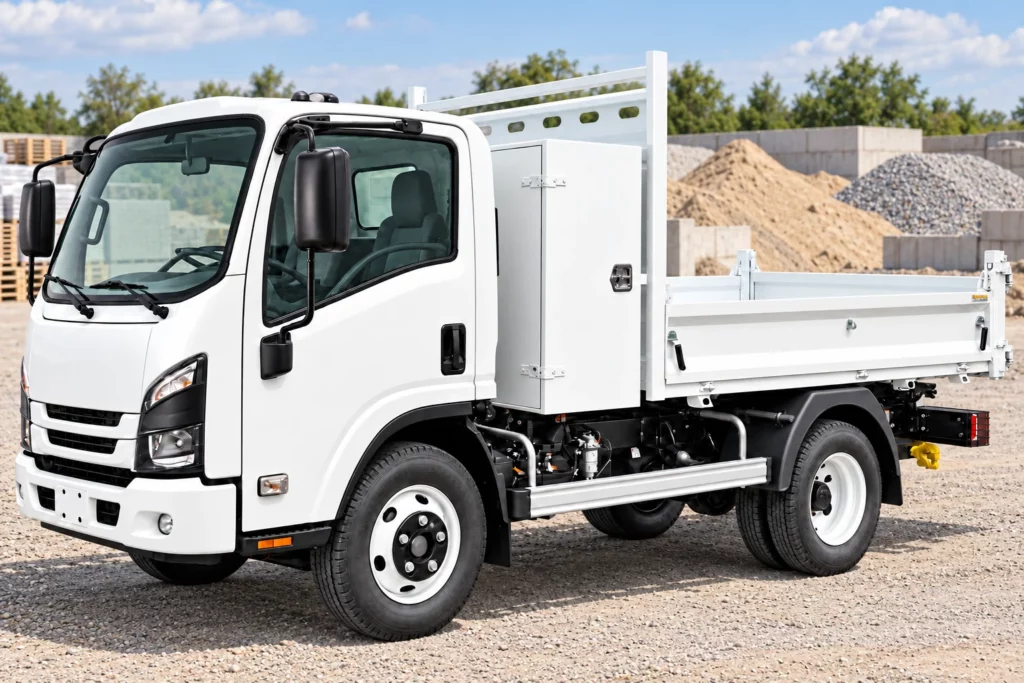
The volume you can carry in a 3.5 tonne tipper depends first on the weight still available in the truck. A body can look barely filled and already have reached that limit. For sand, soil or rubble, the right habit is therefore to convert volume into weight before loading.
The body gives a volume, not a weight allowance
The dimensions of a tipper body let you estimate its geometric volume. They do not tell you how much of each material you are allowed to carry on the road. That quantity depends on the complete truck, the people on board and the equipment already loaded.
Extension sides make a bulkier load possible. They do not increase the gross vehicle weight (GVW) and they add weight themselves. Whether they are worthwhile depends on the material carried and on the uses permitted for the equipment.
Start from the remaining capacity
Before talking about cubic metres, work out the weight you can still take on board. If necessary, weigh the vehicle ready to go, then compare its weight with the GVW. Check the axle limits as well.
For example, a truck with a GVW of 3,500 kg that already weighs 2,700 kg in its departure condition theoretically has 800 kg left for what is still to be loaded, subject to the other limits. This example is fictitious: it does not describe a payload guaranteed by CIL.
Convert the available weight into volume
The relationship is simple: weight of material = volume × density. Turning the calculation round gives an indicative volume from the remaining capacity.
Take a material whose supplier states a density of 1,600 kg per cubic metre. With 800 kg available, the calculation gives 800 ÷ 1,600 = 0.50 m³. The 1,600 kg/m³ is a teaching assumption here, not a value that applies to every sand or soil.
To do this calculation with your own figures, use our payload calculator: it gives the weight available, then the volume you can load for each material.
| Information needed | Where to check it |
|---|---|
| Remaining capacity of the truck | Weighing and the vehicle’s plate and documents |
| Weight of the planned material | Supplier, weighbridge ticket or a suitable measurement |
| Loading conditions | Instructions and limits of the vehicle |
Why the same volume can weigh differently
The type of product, its moisture content and how compacted it is all change the result. Dry soil and wet soil should not automatically be treated as equivalent. Mixed rubble can also be hard to estimate.
So ask for weight information that matches the product actually supplied. When there is a lot of uncertainty, weighing confirms the load. Regulation 80 of the Road Vehicles (Construction and Use) Regulations 1986 sets the limits to respect: the weights shown on the vehicle’s plate. Having room left in the body does not allow you to exceed them.
For a driveway, a patio or a planting bed, our materials calculator gives the cubic metres and tonnes to order, and the number of trips with your tipper.
Choose the tipper to suit your usual loads
Soil, green waste and building materials do not call for the same volume. Before choosing the equipment, describe your work and your usual trips. You can look at the CIL 3.5 tonne tipper, then ask for a proposal suited to your use.
Frequently asked questions
Can you load right up to the top of the dropsides?
Only if every weight and usage limit is still respected. Height alone is not enough.
Does a cubic metre of soil always weigh the same?
No. Its composition and moisture can change its weight.
Does a net let you carry more?
It does not change any weight limit.
Do extension sides increase the capacity in kilos?
No. Their own weight actually reduces the remaining capacity, all other things being equal.
A project? Need a  tipper? A question?
Write to us or call us: we will get back to you quickly.
Request a quote