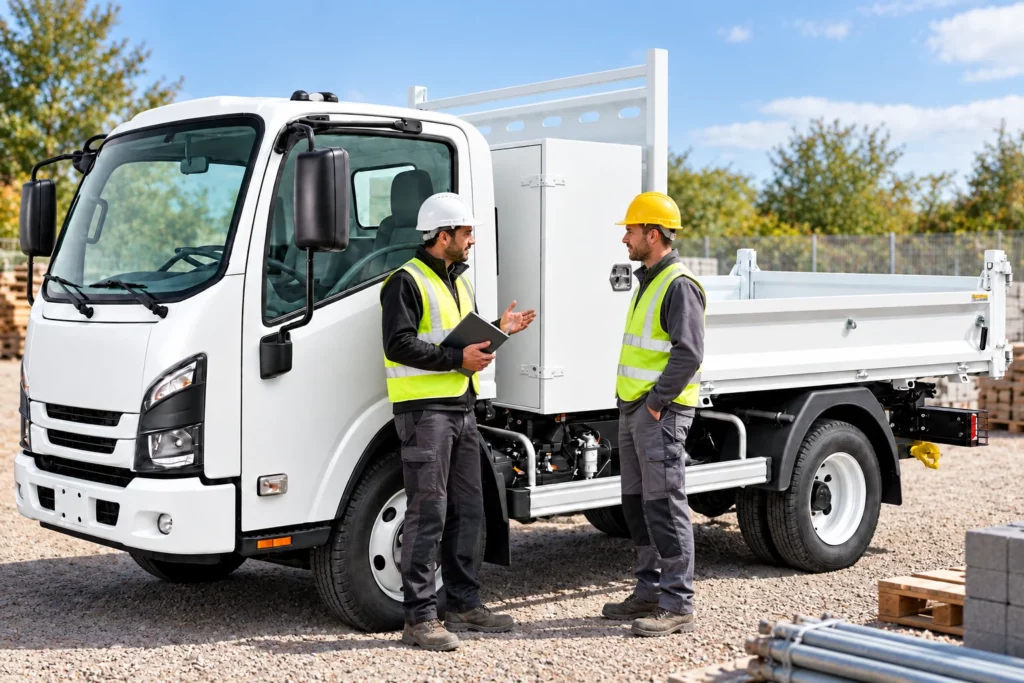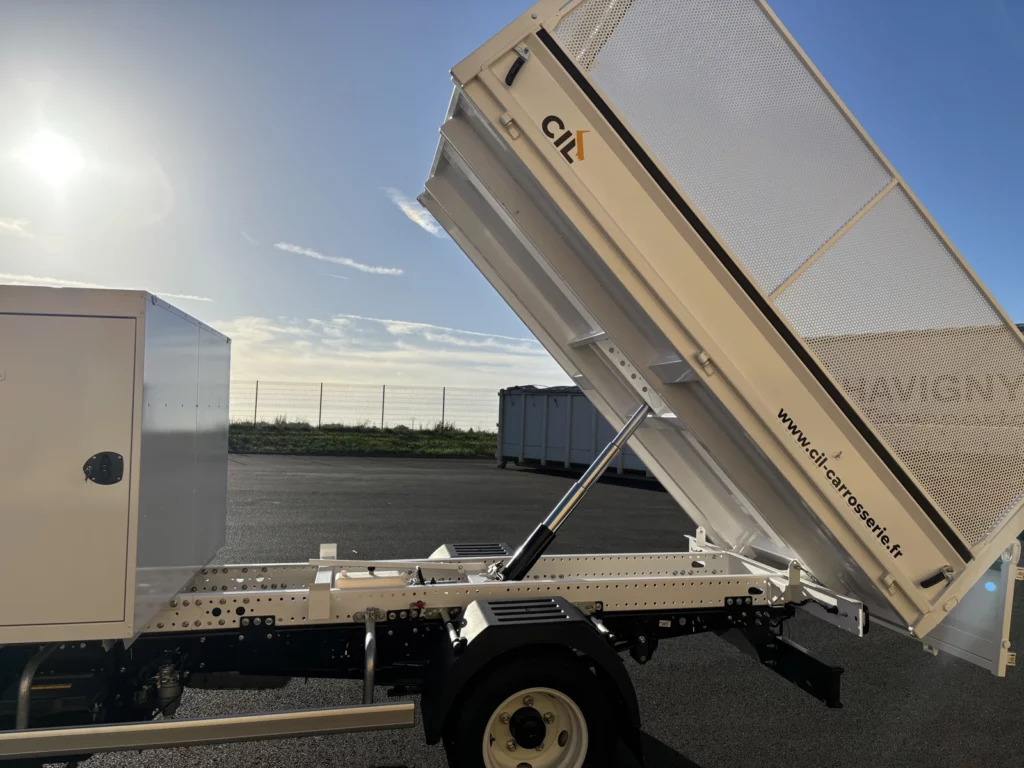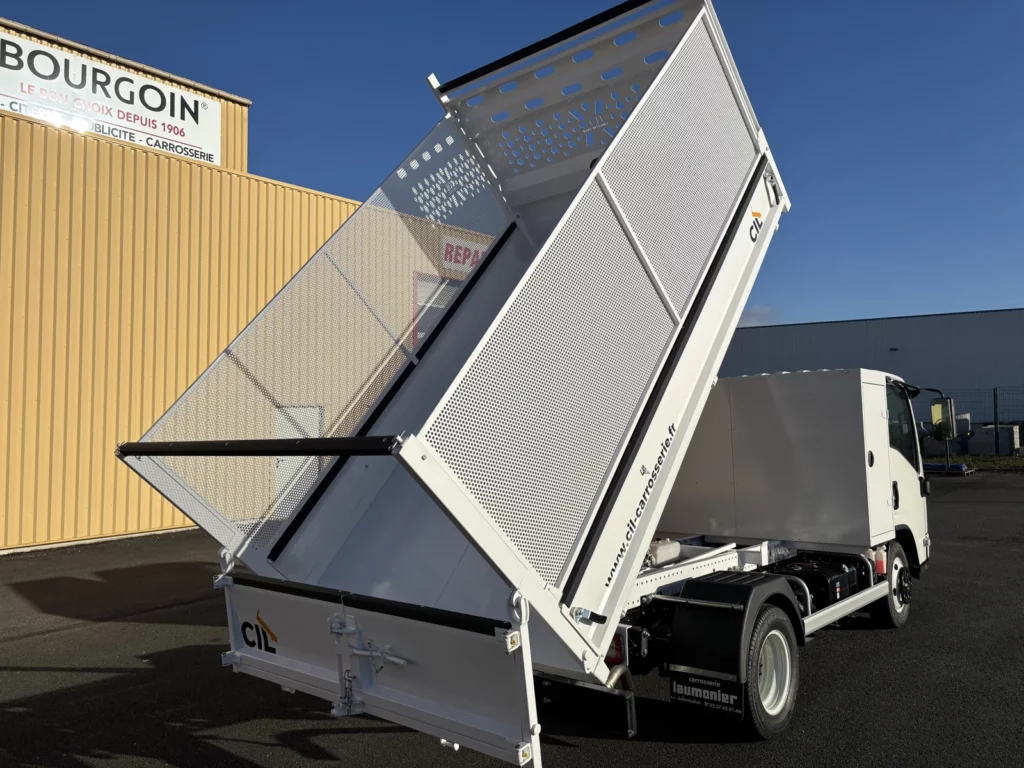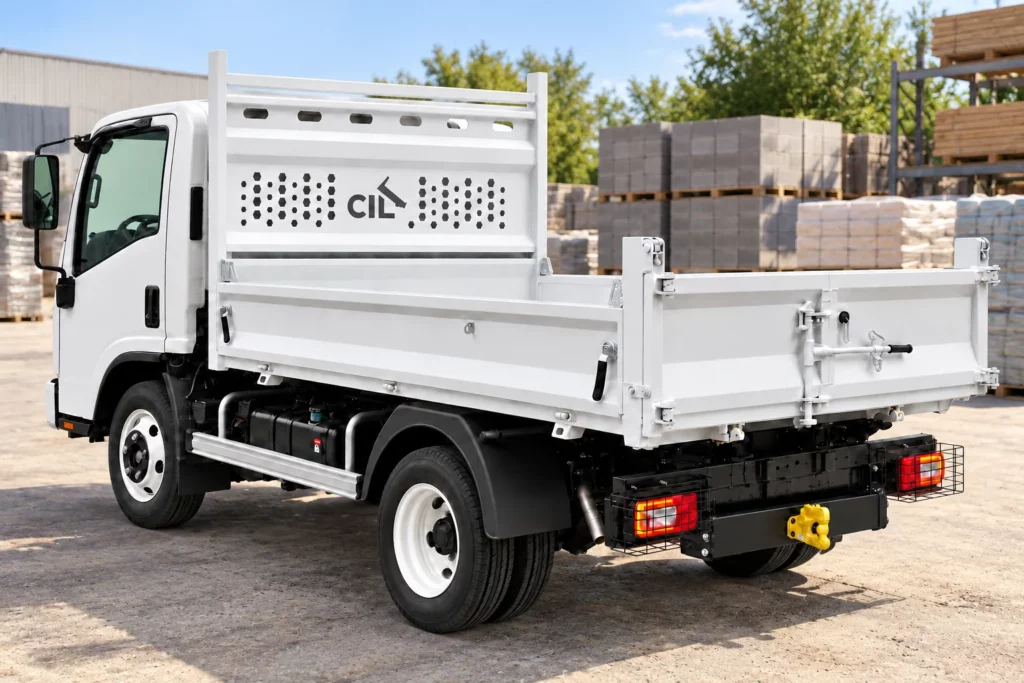
Loading a tipper truck properly means respecting the permitted weight, but also placing the materials correctly. A heap concentrated at the rear or an off-centre load can cause problems even if the total weight seems acceptable. Planning the load avoids discovering this once the body is full.
Respect several limits at once
The truck has a limit on its total weight and limits on the load on each axle. They must be respected together. A load below the gross vehicle weight (GVW) therefore does not prove, on its own, that the distribution is correct. The principle is set by regulation 80 of the Road Vehicles (Construction and Use) Regulations 1986, which covers every weight shown on the vehicle’s plate, including the axle weights.
The characteristics of the chassis and the position of the tipper body affect how the truck can be loaded. Use the documents for your vehicle and the loading plan when one is supplied. There is no universal percentage that applies to every tipper truck.
Plan the loading order
Before loading, identify the materials and tools that will make the journey. Check their weight, their size and how to hold them in place. A pallet, bags and loose material are not loaded in the same way.
Avoid dropping everything wherever is easiest to reach and correcting it afterwards. Moving a heavy load by hand inside the body creates an extra difficulty. The position should be planned with the handling equipment and according to the vehicle’s instructions.
Balance the load without improvising a positioning rule
Aim for a suitable distribution front to back and between the two sides. Keep heavy items as low as their transport allows. Do not automatically put everything against the rear door or everything on one side.
For loose material, watch the result during loading from a safe position. Do not climb into the body while a machine is tipping materials into it. If you have any doubt about the load on an axle, have it checked rather than relying on how the truck is sitting.
The right position does not replace securing
A well-placed load can still slide or tip under braking. Depending on its nature, it must be blocked and secured with suitable means. The dropsides do not guarantee that every type of equipment will stay in place.
The anchor points, the restraints used and their capacity must match the situation. A tarpaulin or a net can help contain some materials, but does not replace securing a machine or a heavy load. The government guidance on securing loads (GOV.UK) sets out the methods, and the standard BS EN 12195-1 gives the calculation of securing forces.
A final walk round before setting off
Check the load, the locks, that nothing has been left behind and any accessories that could move. A tipper that closes properly does not show that the weight is within limits: both checks are still needed.
Preparing your next commercial vehicle? Tell CIL about your usual loads. The CIL tipper page is a basis for looking at equipment that matches the way you work.
Frequently asked questions
Below the GVW, can you still overload an axle?
Yes. The distribution must also be checked.
Should you always load everything at the front?
The position depends on the vehicle’s specifications and limits; a single rule would be misleading.
Should a heavy load be placed high up?
Keep the centre of gravity as low as possible and follow the appropriate loading plan.
Can you correct a load by climbing into the tipper?
Plan a safe, suitable handling method; do not go into an exposed area.
Updated 25 October 2026
A project? Need a  tipper? A question?
Write to us or call us: we will get back to you quickly.
Request a quote